Description
About the Author
Sigmund Freud (1856–1939) is widely regarded as the father of psychoanalysis and one of the most influential thinkers of the modern era. Born in Freiberg, in what is now the Czech Republic, Freud moved to Vienna as a child, where he would spend most of his life. Initially trained as a neurologist, Freud’s pioneering work redefined our understanding of the human mind and laid the foundation for modern psychology.
Freud’s groundbreaking theories, including the unconscious mind, repression, and the significance of dreams, challenged the scientific and cultural norms of his time. His works, such as The Interpretation of Dreams, The Ego and the Id, and Civilization and Its Discontents, explore the intricate dynamics of human behavior, the interplay between conscious and unconscious forces, and the profound influence of childhood experiences on adult life.
Freud’s concept of the “talking cure” revolutionized therapy, introducing techniques like free association and dream analysis that remain central to psychoanalytic practice today. His idea of the “Freudian slip,” introduced in Psychopathology of Everyday Life, has entered common parlance, highlighting his enduring cultural impact.
Despite facing criticism and exile during his lifetime—especially after fleeing Nazi-occupied Austria in 1938—Freud’s intellectual legacy continues to shape disciplines as diverse as psychology, literature, philosophy, and art. His ability to probe the complexities of the human psyche has made him one of history’s most transformative figures.
Freud spent his final years in London, where he continued his work until his death in 1939. His profound insights into the mind have left an indelible mark on how we understand ourselves and the world around us.
Blurb
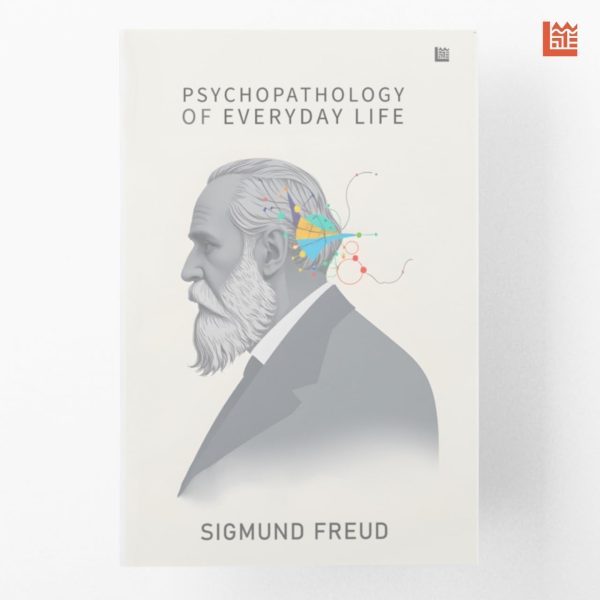
What do forgotten names, slips of the tongue, and misplaced items reveal about the mind? Sigmund Freud’s Psychopathology of Everyday Life is a fascinating look into how the unconscious shapes even the most ordinary moments of our lives. Freud uncovers the hidden meanings behind these everyday mistakes, showing how they expose our deepest thoughts and feelings.
First published in 1901, this groundbreaking book introduced the concept of the “Freudian slip,” forever changing how we understand human behavior. With clear explanations and real-life examples, Freud connects simple, everyday acts to the powerful workings of the subconscious mind.
As one of the most influential figures in psychology, Freud’s insights remain relevant and thought-provoking, offering readers a deeper understanding of themselves and others. Whether you’re new to psychology or curious about the mysteries of the mind, Psychopathology of Everyday Life is a timeless guide to the unseen forces that shape our actions.
Discover the hidden stories behind life’s smallest moments—start your journey into the unconscious with this enduring classic today.


Reviews
There are no reviews yet.