Description
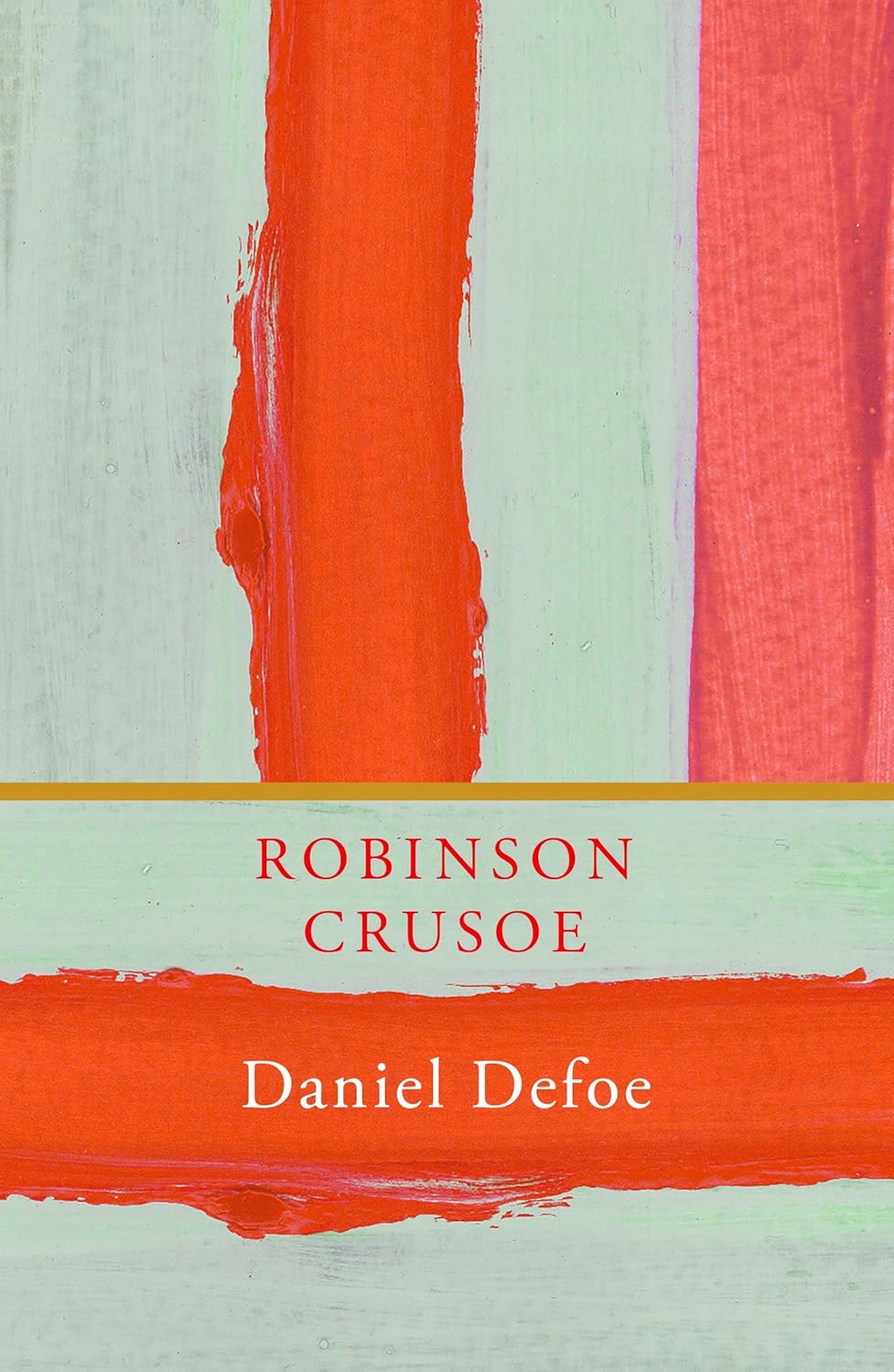
Fleeing from pirates, Robinson Crusoe is swept ashore in a storm, with only a knife, a box of tobacco, a pipe and the will to survive. Robinson Crusoe is the saga of a man alone: A man who overcomes self-pity and despair to reconstruct his life. In his journal he chronicles his daily battle to stay alive, as he conquers isolation, fashions shelter and clothes, first encounters another human being and fights off cannibals and mutineers. With Robinson Crusoe, Defoe wrote what is regarded as the first English novel and created one of the most popular and enduring myths in literature. But above all, it is a brilliant narrative, depicting Crusoe’s transformation from a terrified survivor to the self-sufficient master of his island.
About the Author
Daniel Defoe (1660–1731). Working as a merchant, economist, journalist and spy before writing his first novel at the age of sixty, Daniel Defoe is thought by many to be the first true novelist in the English language. Christened simply Daniel Foe (he did not change his name to the more genteel Defoe until around 1695), he was born in London in 1660. the son of a tallow-chandler, his childhood years saw great change in London, witnessing both the Plague and the Great Fire of 1666. Defoe was educated first at Dorking from 1671 and then at Morton’s Academy for Dissenters in Newington Green, attending the latter with a view to becoming a Presbyterian minister. This idea was, however, abandoned sometime in 1682 when he became a hosiery merchant based in Cornhill. Travelling widely to France, Spain, the Low Countries and possibly beyond, Defoe was to remain intrigued by travel throughout the rest of his life. In 1684 Defoe married Mary Tuffley, receiving a dowry of £3, 700 but this proved an insufficient figure to keep him from bankruptcy and he was later jailed for debt. Defoe’s life was extremely varied; fighting briefly in the Duke of Monmouth’s rebellion of 1685, he was also a strong supporter of William of Orange in the ‘Glorious Revolution’ three years later. It was at this time that Defoe started writing political tracts, with his first important work, An Essay upon Projects, appearing in 1697. One of Defoe’s most notorious and ironic pamphlets, the Shortest Way with Dissenters (1702), led to him being fined, put in the pillory and then jailed at Newgate prison. Intervention by a Tory minister, Robert Harley, secured Defoe’s release and for the next eleven years he served as a secret agent and political journalist for Harley and other ministers. It was during these years to 1713 that Defoe single-handedly wrote and produced the Review, a pro-government paper. Throughout his life he delighted in role-playing and disguise, using it to great effect as a spy and in his writing he often adopted a pseudonym or another personality for rhetorical effect. A prolific and versatile writer, he wrote over five hundred books, pamphlets and journals on a wide range of topics including politics, crime, religion, geography, marriage, psychology and the supernatural. Defoe turned to fiction relatively late in life: his first novel, Robinson Crusoe, was not published until 1719. Defoe’s other main works, Moll Flanders, a Journal of the Plague Year and Roxana, followed shortly after. Daniel Defoe died in 1731, reportedly of ‘a lethargy’ and was buried at Bunhill Fields in London.



Reviews
There are no reviews yet.